Your Brain on Art: A Review—and How It Changed My Definition of Creative Success
Explore a personal review of the book, Your Brain on Art, and discover how it reshaped my understanding of creative success, moving beyond earnings and fans to a deeper appreciation of creativity.
BOOK REVIEWHEALINGLIVING CREATIVELYFEATURED IN ART STUDIO
Science, Stories, and Real-World Creativity in Action
The book demonstrates how art transforms, heals, and strengthens individuals and communities. Throughout the chapters, I appreciated the authors’ consistent formula: they blend scientific research with compelling personal stories and highlight individuals or organizations bringing these creative concepts to life. While the book explores dozens of disciplines, I have selected a few key highlights to share with you.
The Power to Transform and Heal
One of the most moving stories illustrating the power of art to heal is that of artist Judy Tuwaletstiwa. Judy carried deep trauma into her adult life, rooted in the intergenerational pain of Holocaust survivors and a childhood shaped by her father’s violent temper and mental illness. Despite achieving traditional success—studying English literature at Berkeley and Harvard, teaching herself art, and raising four children—the weight of her past and her husband’s bipolar disorder took a heavy toll. Seeking to reclaim herself, Judy relocated to the Southwest. To provide context for her journey, the authors first explain how the brain processes trauma:
Why This Book Caught My Attention
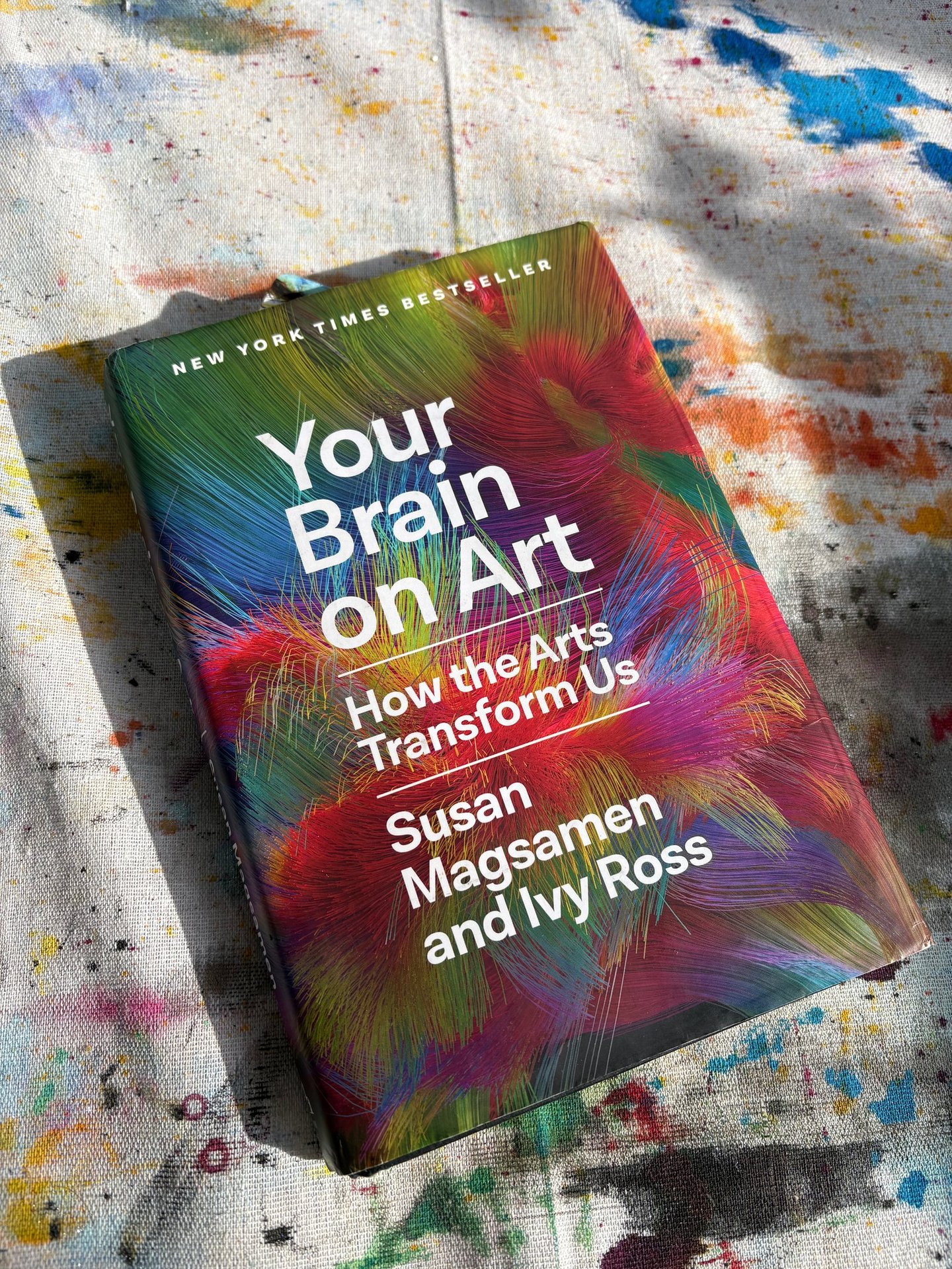
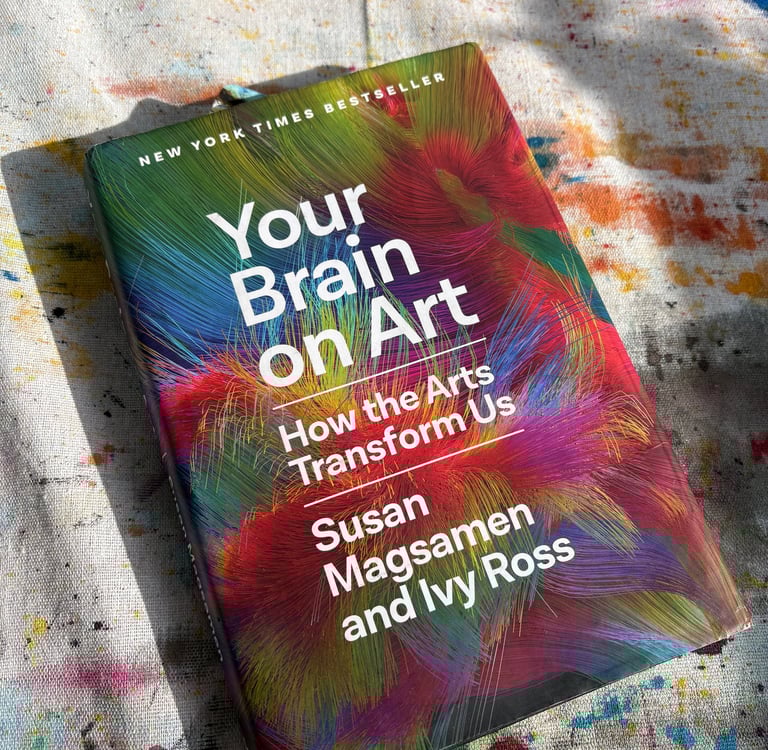
Your Brain on Art: How the Arts Transform Us by Ivy Ross and Susan Magsamen uses scientific evidence, real-world examples, and inspiring stories to show how many forms of art—from architecture and gardening to painting and music—support healing, growth, and flourishing for everyone, not just for artists.
I discovered Your Brain on Art while searching for information on how the visual arts affect brain health and healing. A few years ago, my oldest son suffered a severe traumatic brain injury, and I felt strongly that the many loves he pursued before the accident—karate, drawing, writing, languages, mathematics, film, digital art, choir, and playing several brass instruments—would be key to his recovery. When I saw that one of the authors co-directs the NeuroArts Blueprint (a project advancing the science of art, health, and wellbeing) that I had recently discovered, my curiosity was immediately piqued—and I hit the “buy” button.
Letting Images Change: How Art Helps Us Move Through Trauma
Earlier in the chapter, the authors share a simple but powerful insight into why making art can transform us. Somatic therapist Resmaa Menakem, who uses body-based techniques to help release trauma, describes trauma as “a spontaneous protective mechanism used by the body to stop or thwart further or future potential damage. Trauma is not a flaw or weakness. It is a highly effective tool of safety and survival.” Building on that, he adds: “The arts can be a softened way of leaning into the hardened boundaries of trauma; they unarm you and are a way that gets underneath the defensive mechanisms.”
Listening to What the Painting Knows
Judy worked on the first painting for six months. As the series progressed, she sat reflectively with both the ugly and the beautiful—the honest and the chaotic—before letting each layer go and painting over it. She describes her art this way: “They have a special intelligence that helps us go inside ourselves—where only we can journey.”
Who This Book Is For: From Dancers to Gardeners
(and Everyone in Between)
There is something for everyone in this book, which is why I’ve gifted it more than once. A friend once borrowed my copy; even though they didn’t plan to read the whole thing, they were drawn (pun intended) to the chapter on dance because it felt personally relevant. They found that section genuinely engaging—high praise from someone who had just retired after a long, “left-brain” career in IT at IBM. I remember thinking: if one chapter can resonate that strongly, almost anyone can find something meaningful here.
…as an artist and creative thinker, it felt like candy. Since reading it, I’ve tried to hold a different mindset about making art: not only as self-expression, not only as “pretty paintings” for sale, and not only as a reflection of the world around me—but as a practice that changes me internally and helps me show up in my relationships with more honesty, genuineness, and love.
Key Takeaways
Art can transform, heal, help us flourish, and strengthen communities.
The benefits of art are accessible to both participants and observers—this book is for everyone.
An artist shouldn’t measure success only by earnings or external validation, but by how they’re transformed—and how that transformation (and their work) becomes a gift to the world.
How the Book Changed My View of Success:
Art as Life-Giving, Not “Extra”
The book confirmed my intuitions and gave me even more motivation to pursue creativity for the greater good—to show up more fully in my role in the world.
It also satisfied my analytical, “left-brain” side: the value of making and practicing art isn’t an “extra” in life—it’s life-giving. Literally. Just as importantly, it nudged me to approach my creative work with goals bigger than revenue or recognition; in that sense, I can’t truly fail, because my success isn’t measured in dollars or fans. Success is measured by my willingness to express, the joy of the process, and what the work brings into the world—both internally and externally. I feel genuinely successful, and I hope you do, too.
An Aesthetic Mindset: “Make It Beautiful”
Three words the authors return to throughout the book—aesthetic, mindset, and flourish—resonate deeply with me. They echo a mantra I’ve come back to again and again as my family has navigated trauma: Make It Beautiful. I can’t deny God’s breath in those words; they formed while I was facing the anguishing possibility that my oldest son might remain in an unconscious or semi-conscious state for the rest of his life. And although he has returned to us—somehow—more beautiful than when he left, those words carried hope and strength in the years after his accident, through a journey that has been, at the very least, challenging for all of us.
An aesthetic mindset doesn’t mean being superficial. To me, it means fashioning the invisible into the visible—helping me see and, I hope, helping others see. Giving form to what’s internal (and even eternal) through sensory-rich expression deepens our experience of life—and, with guidance, can grow our souls in ways that only God knows.
Your Turn: How Do You Define Success in Your Art?
Comment below: How do you define success? What benefits have you experienced from practicing your art? And how can the “average” person live a more creative life?
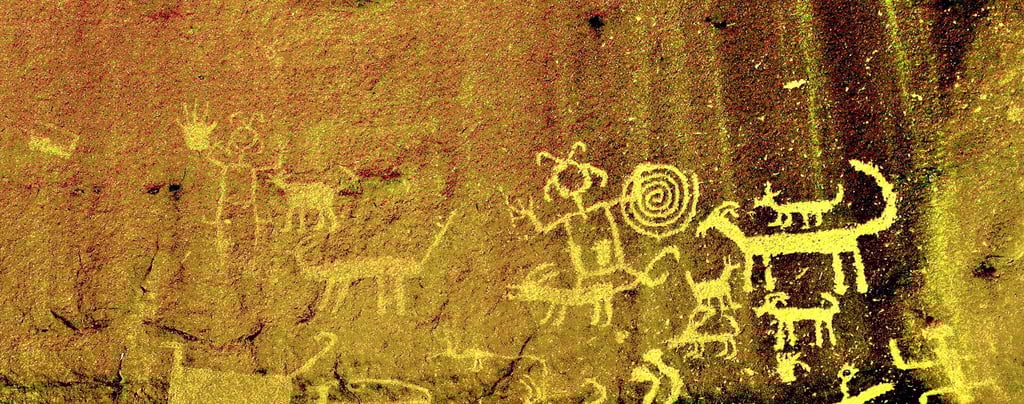
Wvbailey, CC BY-SA 3.0 <http://creativecommons.org/licenses/by-sa/3.0/>, via Wikimedia Commons
“The brain, undergoing trauma, struggles to create cohesive narratives. Tucked in the limbic system, the thalamus is like the air-traffic control of your sensory inputs, integrating what you see and hear and touch into your autobiographical memory. But it breaks down under extreme stress. You’re often left with sensory snapshots as sensations, sounds, and images. These reside in your unconscious, connected to very strong emotions but without a clear narrative.”
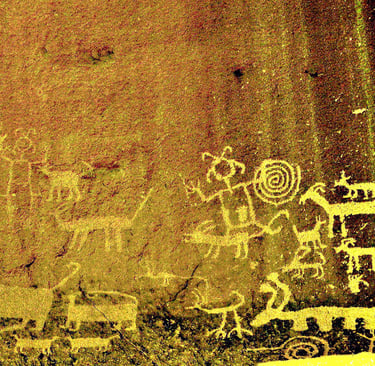
A pivotal experience in New Mexico’s Chaco Canyon—home to murals by Ancestral Puebloans—led Judy to begin painting. She developed what she calls “Continuing Paintings,” inspired by Puebloan murals that were traditionally whitewashed at the end of ceremonial cycles, creating layers upon layers over time. As she worked, Judy began untangling her trauma, photographing each iteration as the paintings evolved. All the emotions flooded onto the canvas and then disappeared, “She grew to trust the process of letting one image disappear as another formed.”
Comments
maria@marialaraart.com
(802) 281-3337
Feed Your Creativity
Inspire your life. Strengthen your creative side. Grow.
© 2026. All rights reserved. All artworks © Maria Lara. No use in AI training, datasets, or generative models without written permission.